
What to Eat in Fes (Fez), Dish by Dish
Pigeon pastilla, morning bissara and gazelle horns: Karim explains what to eat in Fes (Fez), dish by dish, from the first bowl of the day until dinner.
 Karim TaziFes ·
Knowing what to eat in Fes starts with one of my grandmother's sayings: you recognise a Fassi family by its table more than by its name. For centuries, Fes was the capital of scholars, merchants and cooks, and its food still carries that memory: sweet-and-savoury dishes brought over from al-Andalus, spices from the caravan trade, recipes that take a whole day. Here's what I have our travellers taste, from dawn to dinner.
Breakfast: bissara and msemen
In the lanes of Fes el-Bali, the bissara stalls open before seven. It's a thick soup of dried broad beans, served in an earthenware bowl, drizzled with olive oil and dusted with cumin and chilli. With a hunk of bread, it keeps you going until lunch and costs a few dirhams. It comes with msemen, a flaky flatbread cooked on a griddle and eaten with honey or with smen, a pungent aged butter.
Pastilla, the dish for special occasions
Pigeon pastilla is the city's most famous dish. Beneath a sheet of paper-thin warqa pastry lies pigeon (or chicken) cooked with onions, saffron and cinnamon, eggs scrambled with herbs, and toasted almonds. The whole thing is dusted with icing sugar and cinnamon. Sweet and savoury at once, it puzzles you on the first bite and wins you over on the second. There's also a more recent seafood pastilla, and a milk pastilla served as dessert.
“You can tell a good pastilla by the sound: the pastry should crackle under your fork, like an autumn leaf.”
Karim
Lunch: tagines and khlii
The quintessential Fassi tagine is chicken with preserved lemons and purple olives. People also eat mrouzia, a lamb tagine with raisins and almonds, richly scented with ras el-hanout and made mostly after Eid al-Adha, the Festival of Sacrifice. Finally, khlii is meat dried in the sun and then preserved in its own fat: Fassi families keep it for months and serve it in the morning, with fried eggs.
In the evening, and during Ramadan
When the fast is broken, every table serves harira, a soup of tomatoes, lentils and chickpeas fragrant with coriander, alongside dates and chebakia, flower-shaped pastries that are fried and then soaked in honey and sesame. You'll find them all year round in the medina's pastry shops.
Sweet treats to take home
- Gazelle horns, filled with almond paste scented with orange blossom.
- Ghriba, small crackle-topped biscuits made with almonds or semolina.
- Sellou, a mix of toasted flour, almonds and sesame that keeps for a long time.
- Thyme or euphorbia honey from the souk, bought from a seller who lets you taste first.
- A jar of salt-preserved lemons, to recreate the tagine at home.
Where and how to taste it all
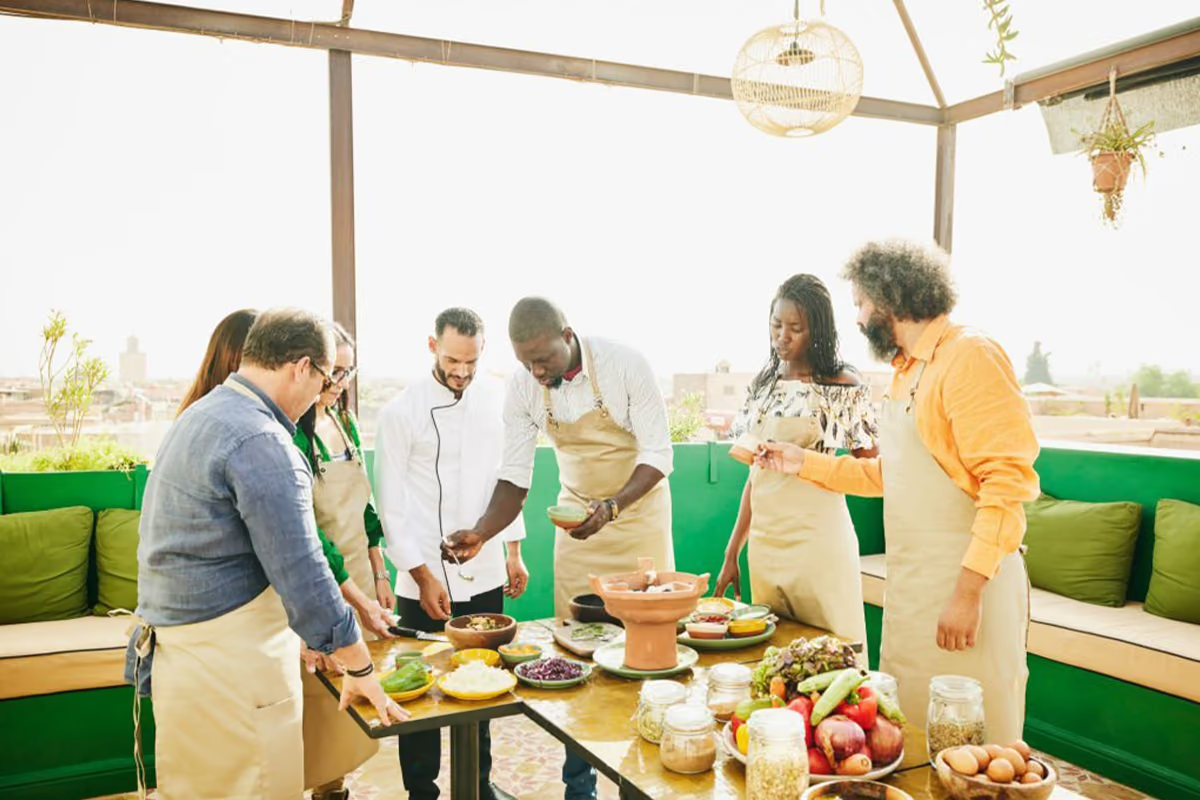
The best meal in Fes is often eaten in someone's home. On our imperial cities tour, we have lunch with a home cook in the Batha district, and we stop by the neighbourhood's communal oven, the ferran, where families still bring their bread to be baked every morning. If you want to go further, our cooking class in a Fes riad teaches you to assemble a pastilla and get a tagine just right, from the market visit to the shared meal.