
3 Days in Marrakech: An Unhurried Itinerary
The medina and souks, palaces and gardens, then a day in the Atlas or an evening in the desert: our 3 days in Marrakech itinerary, paced to avoid burnout.
 Amina El OuazzaniMarrakech ·
Many travellers spend 3 days in Marrakech, often at the start or end of a longer trip. That's enough to get to know the city, as long as you don't try to do everything. The medina wears you out fast: the noise, the heat, lanes that all look alike, the constant calls from vendors. So the itinerary below alternates intense moments with breaks, and keeps one day for getting out of town.
Before you start
If you can, stay in the medina or just outside it: you'll do almost everything on foot. Cars can't get into most of the lanes, and arriving at a riad usually means walking, with a porter for the suitcases. Carry dirhams in cash: monument entry fees, small restaurants and taxis are all paid in cash.
To get around outside the medina, the small beige taxis, the petits taxis, run all over the city. Ask the driver to switch on the meter, or agree the fare before you get in.
Day 1: the medina on foot
Start early, around 9am, while the lanes are still quiet. Set off from the Koutoubia: its twelfth-century minaret is a landmark across the whole city. The mosque itself isn't open to non-Muslims, but you're free to stroll through its gardens. From there, Jemaa el-Fna square is only a few minutes away.
In the morning, the square is almost empty: a few orange juice sellers, the first snake charmers setting up. Don't linger yet; it comes alive in the evening. Instead, head into the souks from the north side of the square. Each lane long had its own trade, and you can still tell: the dyers with their skeins of wool hanging overhead, the coppersmiths, the spices, the babouches, the lanterns.
The first time round, the souks are easier with a guide. Not because they're dangerous, but because it's easy to get lost and to walk straight past the fondouks, old caravanserais hidden behind a doorway where craftsmen still work around a courtyard. Our medina and souks walking tour lasts three hours, with an official guide, and involves no paid entry.
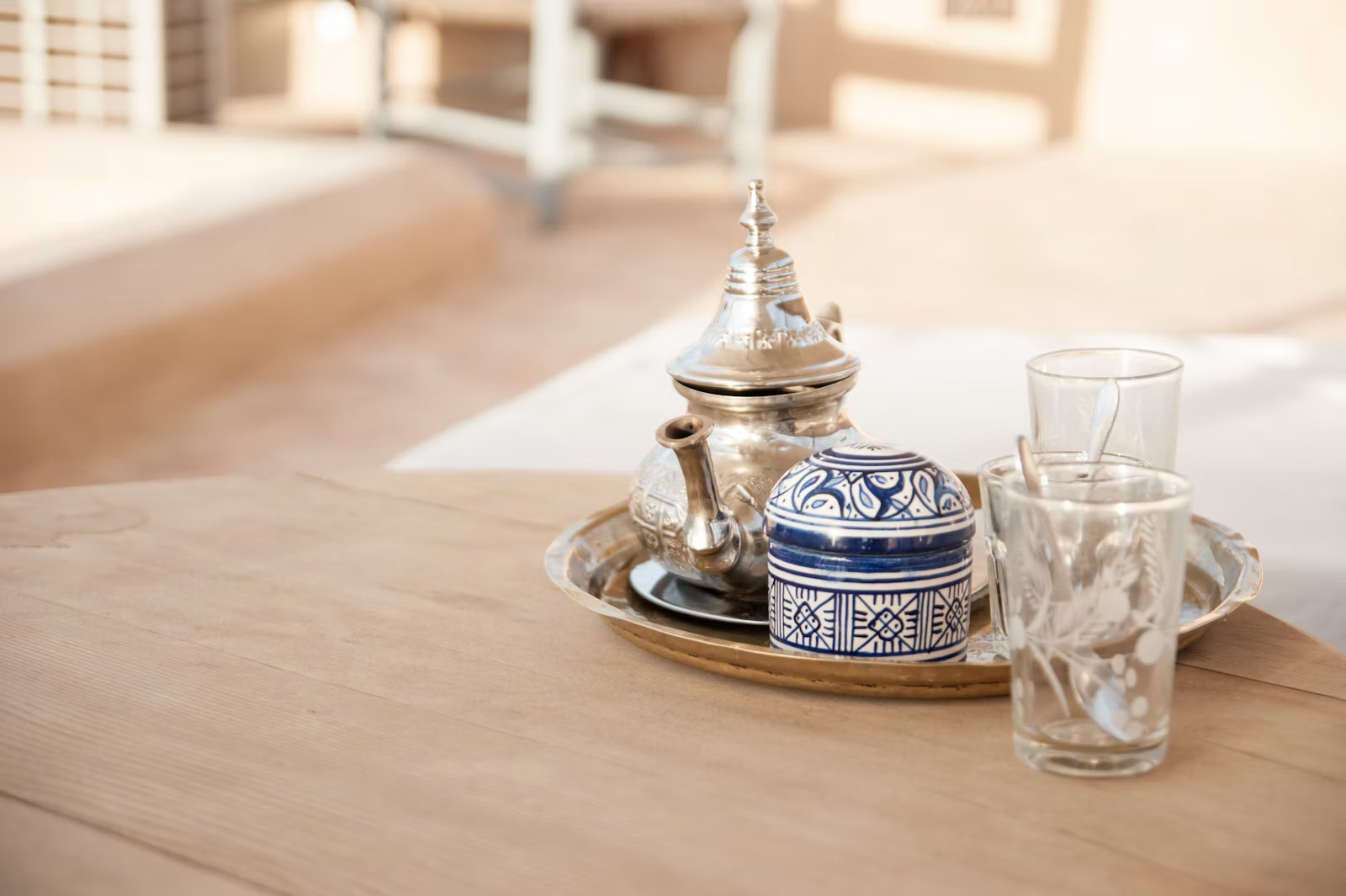
Keep the afternoon light: lunch, then tea on a terrace, a traditional hammam or simply the patio of your riad. We've gathered our favourite spots in six tea houses in the Marrakech medina.
Head back to Jemaa el-Fna at sunset. The grill stalls set up, smoke rises, and the musicians and storytellers draw their circles. It's the best moment for a food tour, so you can taste without hesitating in front of every stall.
Day 2: palaces, tombs and gardens
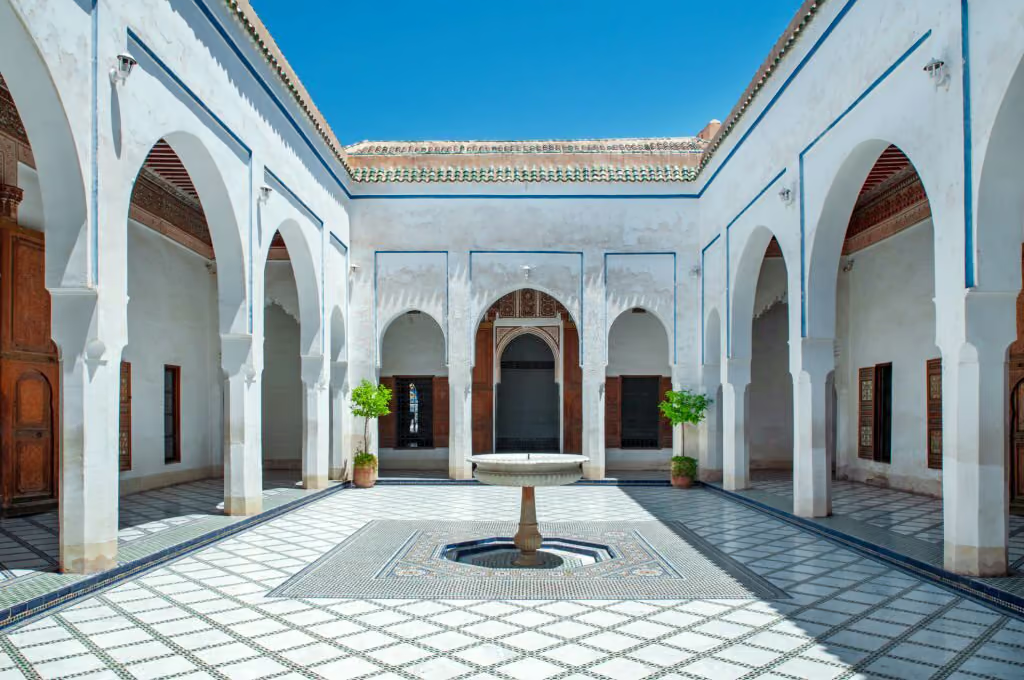
The second morning is for the south of the medina and the city of the sultans. Bahia Palace, built in the late nineteenth century, is a succession of courtyards, gardens and reception rooms clad in zellige tilework and painted wood. The Saadian Tombs, forgotten for centuries and rediscovered in the early twentieth century, hold the burials of the Saadian dynasty in rooms of great finesse. Arrive early: the queue for the small main chamber grows quickly.
In between, walk through the Mellah, the old Jewish quarter, with its covered market and wider streets. If you'd rather have company, our Marrakech monuments tour links these sites in four hours with an official guide; entry fees are paid on site.
In the afternoon, change scene and leave the medina for Gueliz, the new town. The Jardin Majorelle, with its intense blue, its bamboo and its cacti, is one of the most visited places in Morocco: book your time slot in advance. The YSL Museum, right next door, is easy to fit in straight after. Our Majorelle Garden and YSL Museum tour helps you book your entry slots.
At the end of the day, climb up to a terrace in the medina to watch the sun sink over the rooftops and hear the call to prayer travel from one minaret to the next.
Day 3: getting out of the city
After two days in the medina, a day in the open air does you good. Two options, depending on your energy levels.
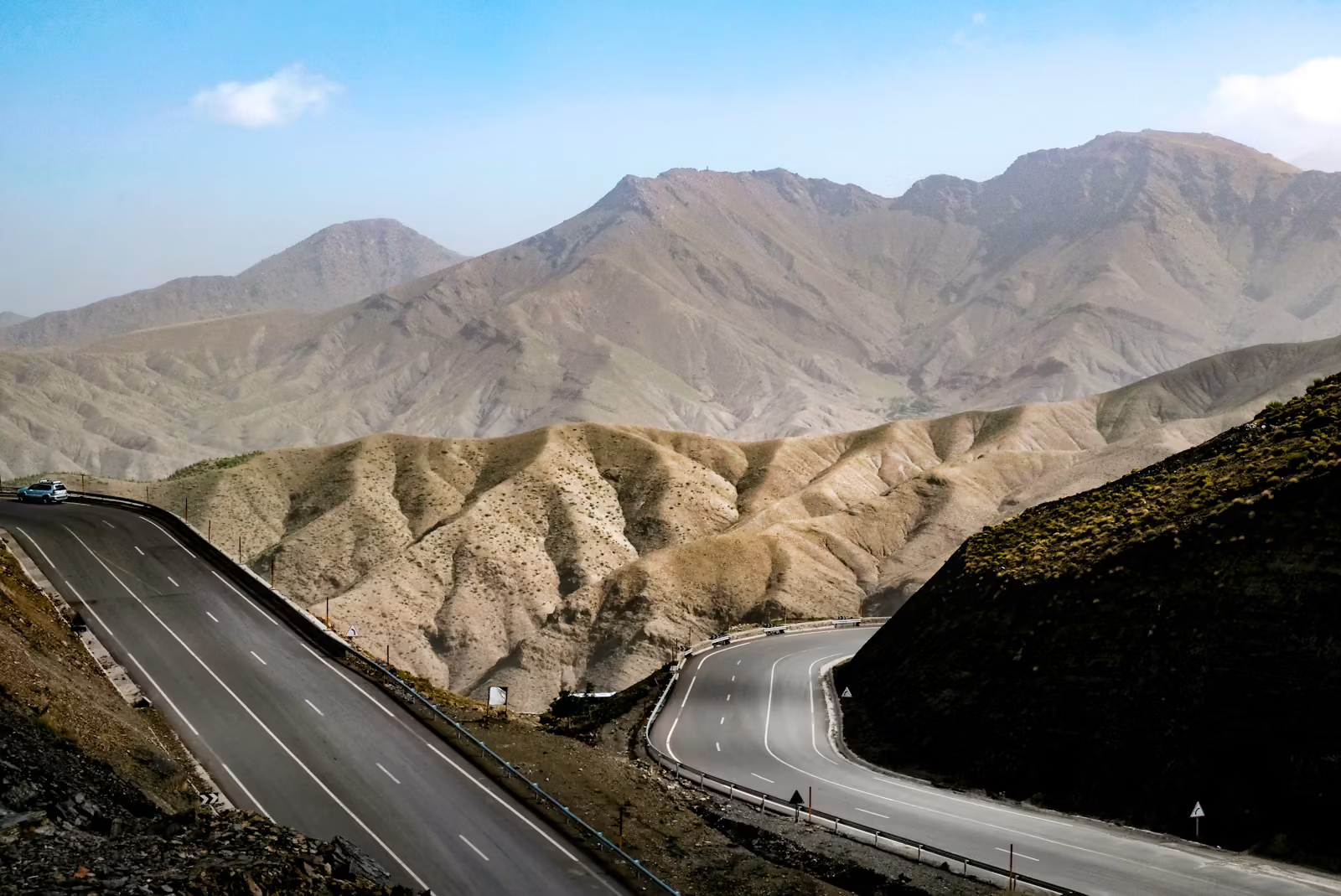
The first: a day in the Atlas Mountains. The Ourika Valley is the closest, with its earth-built villages, riverside cafés and the climb to the Setti Fatma waterfalls. The three valleys of the Atlas day trip goes through Asni and Imlil, at the foot of Mount Toubkal. Either way, you leave in the morning and return in the late afternoon. All our day trips from Marrakech include transport from your hotel or riad.
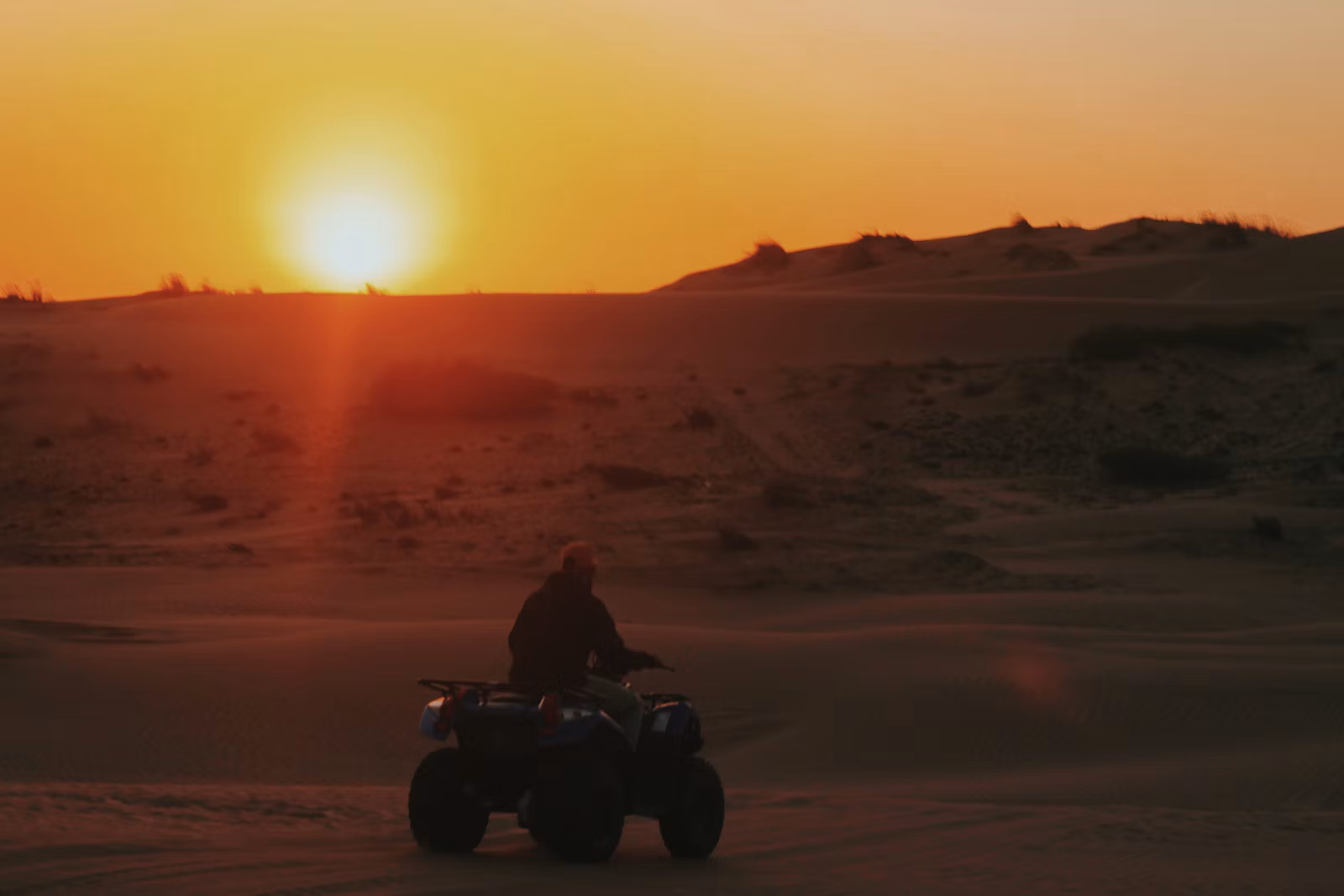
The second: a quiet morning in town, then the Agafay Desert in the late afternoon, 30 to 40 minutes' drive away. A camel ride or an hour of quad biking at sunset, dinner in a tent, then back to Marrakech in the evening. It's a lovely way to round off a short stay: the calm of the plateau after the bustle of the souks. All the options are on the Agafay Desert page.
If you have an extra day
- A Moroccan cooking class, which starts at the market and ends at the table with what you've cooked.
- The Palmeraie, by quad bike or on a camel, around twenty minutes from the centre.
- A day trip to Essaouira, on the Atlantic, for the sea air, the harbour and the blue-and-white medina.
- A night in Agafay, to wake up facing the Atlas.
A few tips so you don't burn out
- Take a proper break every afternoon, especially from May to September, when the heat in the city really builds.
- In the medina, clothes that cover shoulders and knees are a sign of respect, for women and men alike.
- In the souks, a smiling “no, thank you” is enough. Nobody is obliged to step into a shop, or to buy after browsing.
- If someone spontaneously offers to show you the way, or claims a street is closed, decline politely and stick to your plan.
- Always ask before photographing someone.
And if three days feel too short, that's a good sign: Marrakech reveals itself best on a return visit. Tell us what you'd like to add, and we'll build the rest of your trip with you.