
Agafay or Merzouga: Which Desert to Choose?
An evening 40 minutes from the city, two days to Zagora or three to the great Erg Chebbi dunes: Agafay or Merzouga, how to choose from Marrakech.
 Hassan OubahaMerzouga ·
Agafay or Merzouga? It's probably the question we're asked most often, in all sorts of forms. “Is Agafay really a desert?” “Isn't three days rather short for Merzouga?” “And Zagora, is that somewhere in between?” All three choices have their merits, and none of them is a bad one. It all depends on how much time you have, and on what the word desert means to you.
Agafay, the stone desert on Marrakech's doorstep
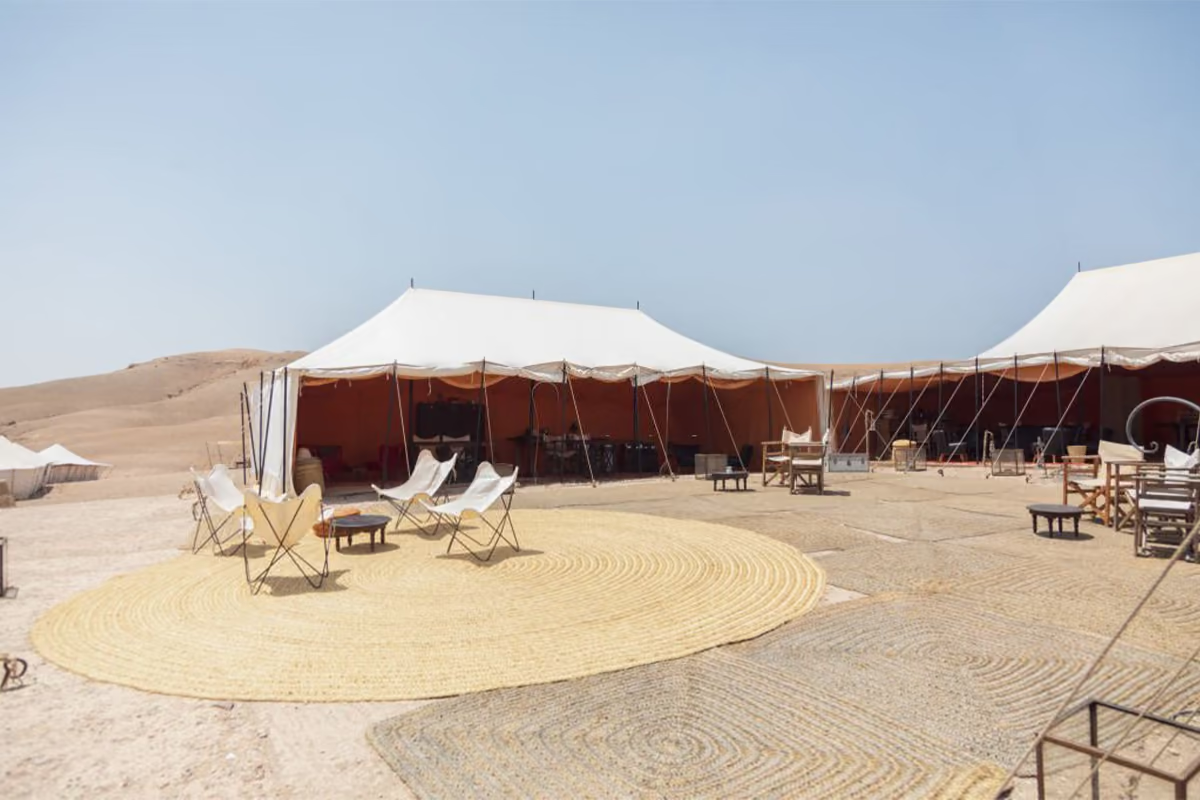
Agafay is an arid plateau around forty kilometres south-west of Marrakech, 30 to 40 minutes by road. The landscape is mineral: ochre and beige hills, ravines, a few villages and, in the distance, the wall of the High Atlas. There are no sand dunes. Those expecting the Sahara of the films are sometimes taken aback; those who come for the calm, the evening light and the starry sky rarely leave disappointed.
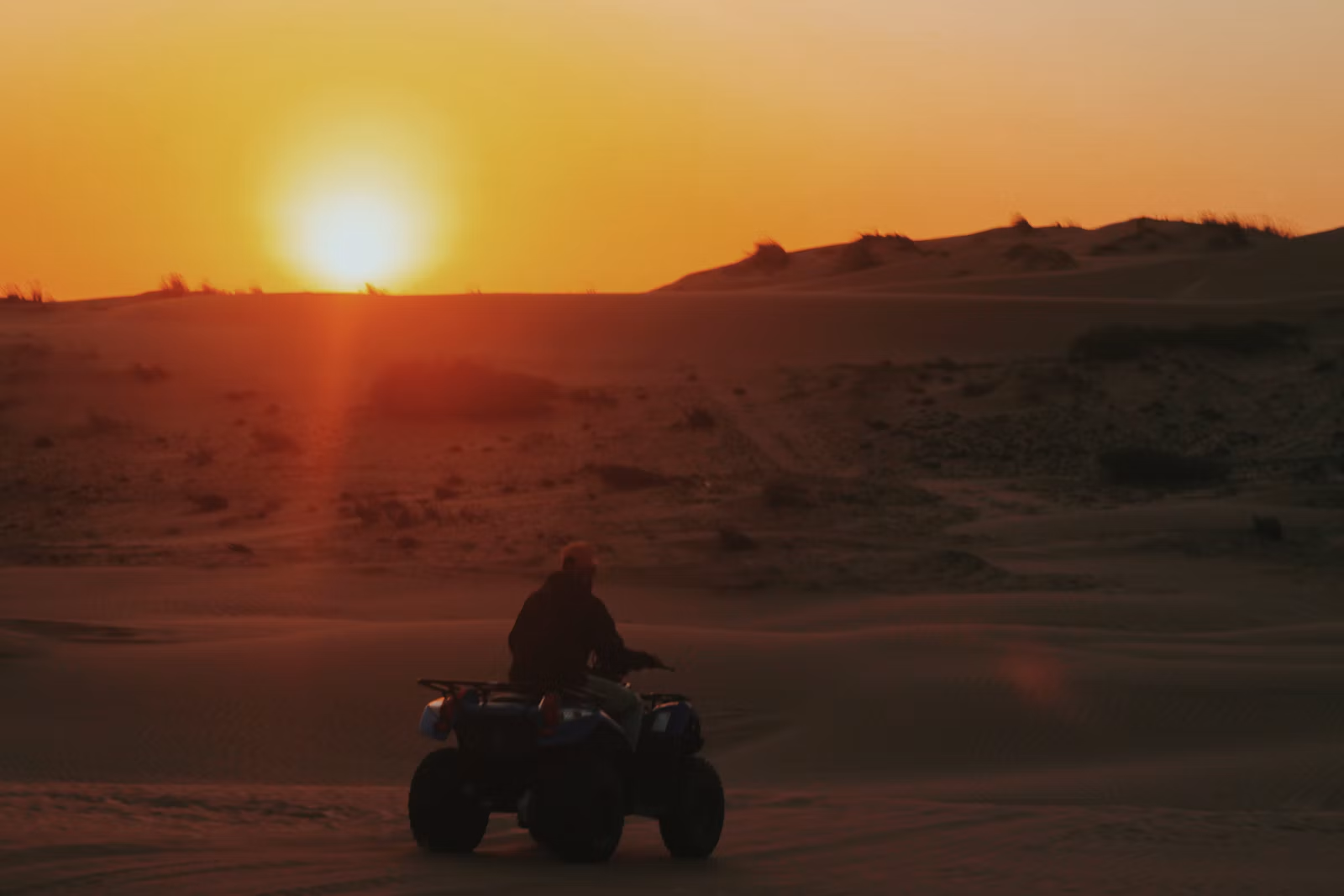
Its great strength is that it fits into half a day. You leave in the early afternoon, go quad biking or on a camel ride, watch the sun set behind the hills, have dinner at the camp and head back to sleep in town. Or you stay the night in a tent and wake up facing the mountains.
Agafay suits short stays, families with young children who struggle with long drives, and anyone who wants a taste of the desert without giving it several days.
Merzouga, the great dunes of Erg Chebbi
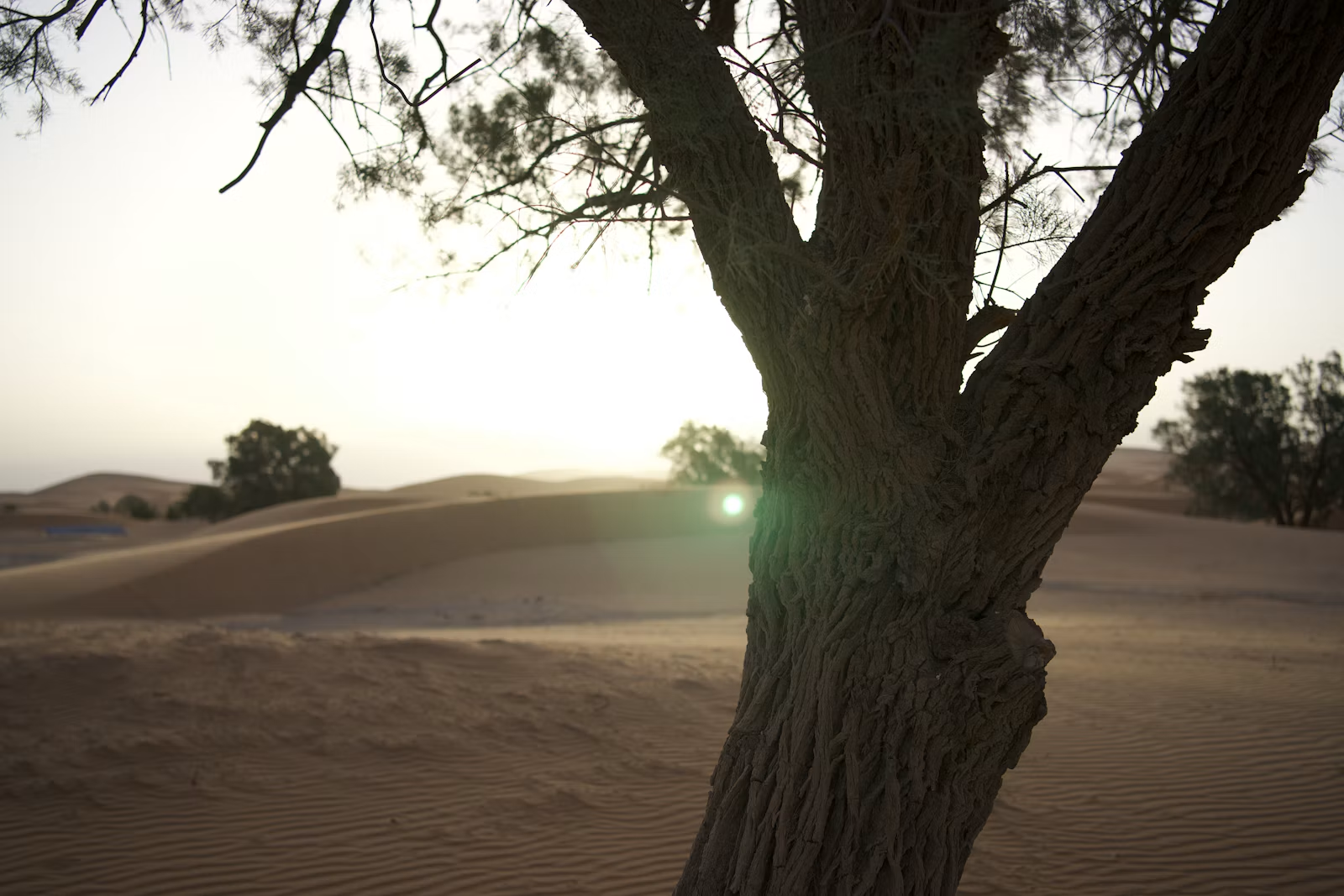
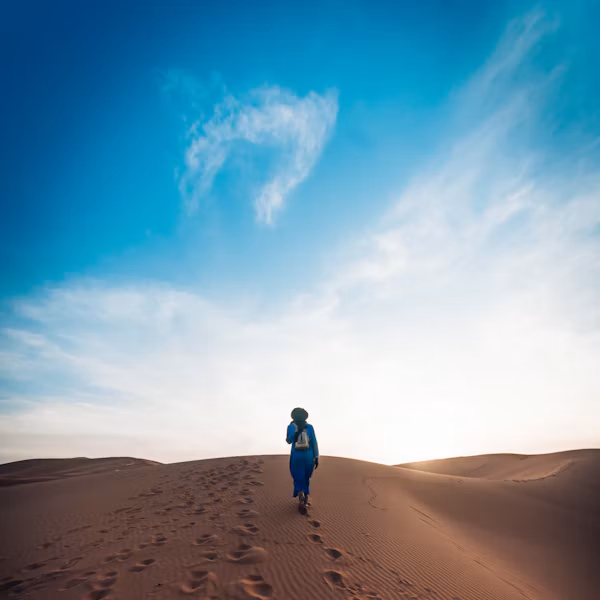
Merzouga sits at the other end of the spectrum. The village lies on the edge of Erg Chebbi, a sea of orange sand dunes, the highest of which reach about 150 metres. Here the landscape finally matches the picture most travellers carry in their heads: sand crests as far as the eye can see, shifting colour from morning to evening.
The price you pay is distance. Merzouga lies more than 500 kilometres from Marrakech, on the far side of the High Atlas. You cross the Tichka Pass, at over 2,200 metres, then go through Ouarzazate and the Dades and Todra valleys. That's why our trip lasts three days: the road is part of the journey, with a visit to the ksar of Aït Benhaddou on the way, a night in the Dades Valley, then the camel ride and a night at a desert camp in the dunes. You return to Marrakech, or carry on to Fes if your trip continues north.
Merzouga is for those who have time and don't mind long hours on the road for a fuller experience. On a first trip of ten days or so in Morocco, it's often the strongest memory.
Zagora, the middle ground
Between the two, the Zagora desert can be done in two days from Marrakech, with a night at a desert camp. You also cross the Tichka and pass Aït Benhaddou, then follow the Draa Valley and its palm groves south. The dunes are far more modest than in Erg Chebbi, but you sleep in the desert, take the camel ride and already watch southern Morocco change its face.
It's the right choice if you want sand and a night under canvas, but can't spare three days for the journey.
It all depends on how much time you have
It's the simplest yardstick, and often the most reliable:
- a weekend or three days in Marrakech: Agafay, in the late afternoon, with or without a night there;
- four to six days: Agafay is still the most sensible choice, and Zagora is possible if the desert is your priority;
- a week or more: Merzouga in three days, keeping some slack before and after.
One piece of advice we often give: don't schedule the trip to the dunes at the very end of your holiday, the day before your flight. In winter, snow can close the Tichka Pass for a while, and the departure is then postponed. It's better to keep a day in hand.
What you'll experience
The three deserts don't tell the same story. In Agafay, it's mostly about the activities and the evening atmosphere: the quad or the camel, dinner in the tent, and the silence that falls all at once as night comes in. In Merzouga, the landscape takes centre stage. You climb a dune before sunrise, watch the shadows of the crests slide across the sand, and finally grasp the scale of the Sahara.
Zagora sits between the two: the journey matters as much as the arrival, with the kasbahs, the palm groves and the road south.
Comfort and seasons
Nights can be cold from November to March. In January, the temperature drops to an average of 6 °C at night in Agafay and 4 °C in Erg Chebbi, with a few nights below zero. Summer, by contrast, makes the Merzouga dunes gruelling in the afternoon. We go through the weather month by month in the best time to visit the Moroccan Sahara.
As for comfort, nights in Agafay range from a simple shared tent to a luxury camp with a private tent and bathroom. For Zagora and Merzouga, the night at the desert camp is spent in a shared tent, with dinner and breakfast; a private tent is available on request, for a supplement.
Why not both?
Plenty of travellers combine them. An evening in Agafay early in the trip, for a first impression of the desert, then the big journey to the dunes a few days later. They're two different experiences, and the first takes nothing away from the second.
All our Agafay options are on the Agafay Desert page, and the trips to Zagora and Merzouga on the Sahara desert tours page. If your trip doesn't fit any of these boxes, tell us what you have in mind: we'll send you an itinerary within 48 hours.