
Best Time to Visit the Moroccan Sahara
October or April? Freezing nights or scorching days? Hassan, who lives in Merzouga, explains the best time to visit the Moroccan Sahara, month by month.
 Hassan OubahaMerzouga ·
When is the best time to visit the Moroccan Sahara? I hear the question every week, usually over the phone, sometimes right in the middle of the dunes: “What if we'd come at a different time of year?” The honest answer is that the desert is beautiful all year round, but January and July are two very different experiences. In Merzouga, at the foot of Erg Chebbi, the gap between day and night matters as much as the temperature at noon.
Here is how I describe the year to travellers who can't make up their minds, month by month: what to wear, what you'll see and what to steer clear of.
October and November: the best season
If I could keep only one season, it would be this one. Afternoons hover around 29 °C in October and 23 °C in November, the sky is unusually sharp and the wind stays calm. Nights remain mild until mid-November: you eat outside under the open tent and sleep without a hat. It's also date season in the Tafilalet palm groves, and we stop to taste the fresh fruit on the way from Erfoud.
December to February: the desert of stars
Winter catches out travellers who picture the Sahara as permanently scorching. Afternoons reach 18 to 20 °C in the sun, but nights drop to an average of 4 or 5 °C in December and January, and sometimes below zero. The reward is dry, crystal-clear air: it's the finest time of year to gaze at the Milky Way, and the dunes are almost empty. Our desert camps provide thick blankets and hot-water bottles; pack a light down jacket, a warm hat and thick socks for the night.
“In January, I wake the group half an hour before dawn. The sand is cold, the tea is piping hot, and nobody regrets leaving their sleeping bag.”
Hassan
March and April: the light, and sometimes the wind
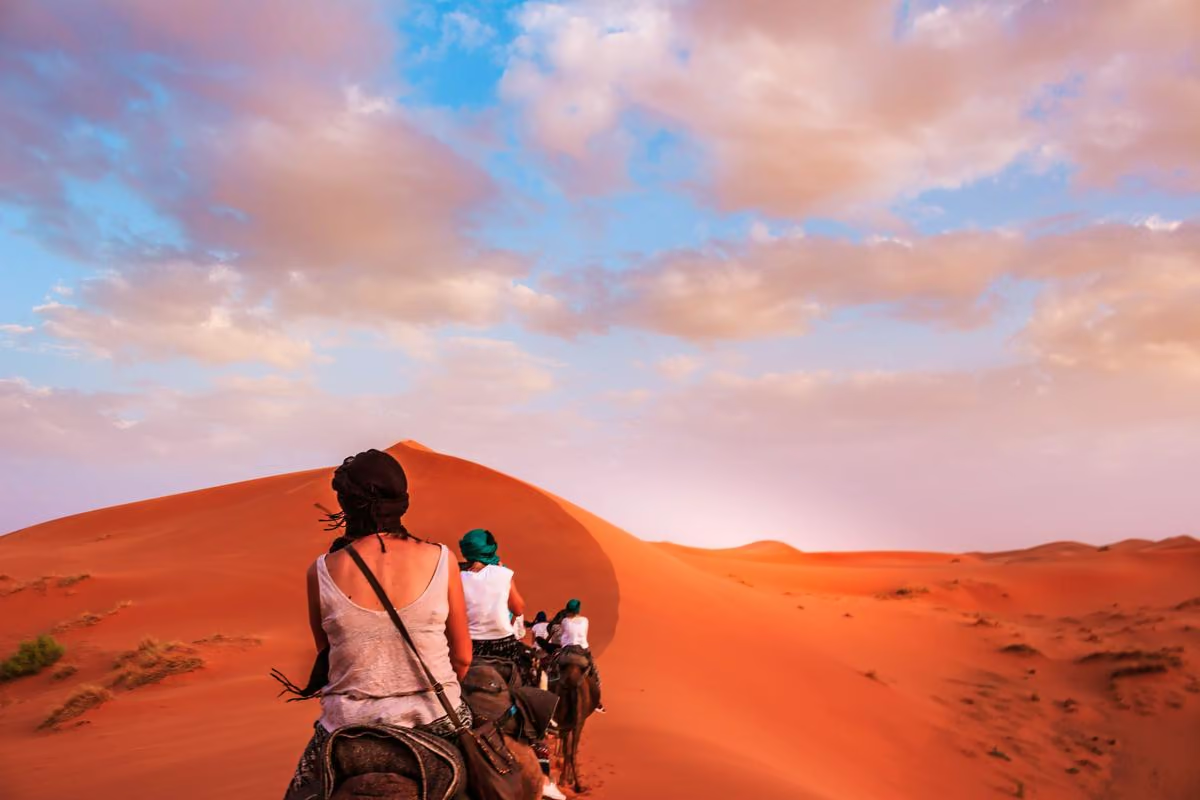
Spring is a very good season: 24 to 29 °C in the afternoon, cool but pleasant nights, and oases in blossom along the Dades Valley road. Just be aware that March and April are the windy months. One or two days of sandstorm can blur the horizon; when that happens, I move the camel ride to the next morning, once the air has settled. A chèche, the long scarf we'll teach you to tie on your first evening, protects your face better than any mask.
May and September: hot, but doable
In May and September, afternoons average 33 to 35 °C. We adjust the pace: we head for the dunes late in the day, rest through the hottest hours and walk at sunrise. Accommodation is cheaper and the camps are quieter.
June, July and August: best avoided, with rare exceptions
In summer, the afternoon tops 40 °C nine days out of ten in July in Merzouga, and the chergui, a hot wind blowing in from the south-east, can make the air stifling. We don't run group departures to the desert in this season. Families who can only travel in July head for the Atlas Mountains and the coast instead, or spend a night under canvas in the Agafay Desert, 40 minutes from Marrakech, where the evenings stay bearable.
My advice in a nutshell
- For a first trip: mid-October to late November, or mid-March to late April.
- For stars and silence: December to February, well kitted out for the night.
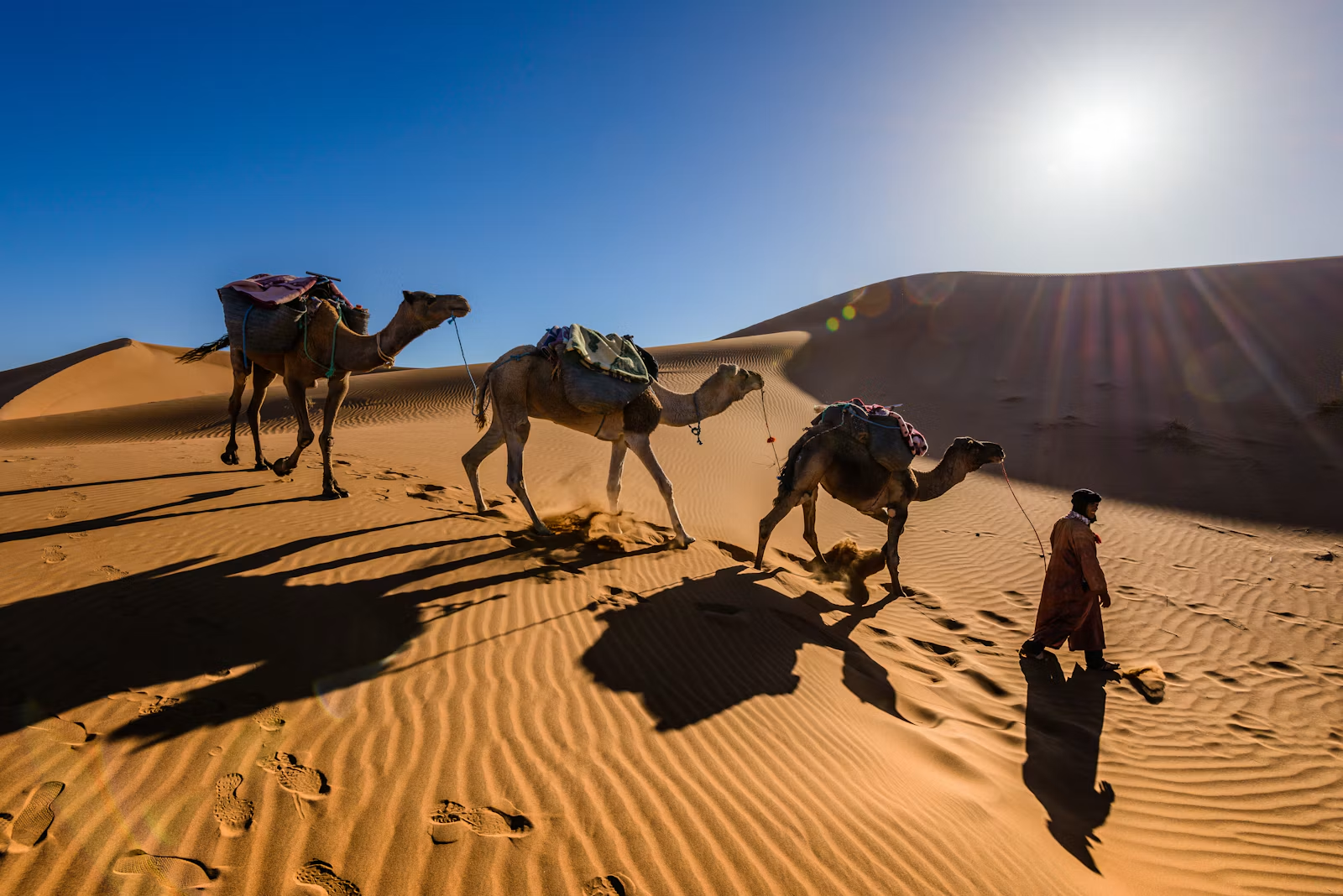
- For photography: winter mornings, when the shadows of the dune crests are at their longest.
- To avoid: June to August, except for a night in Agafay.
- Check the dates of Ramadan: the desert stays open to visitors, but the rhythm of the day changes.
Whatever the season, one thing never changes: the road from Marrakech is long, and it deserves to be taken slowly. That's why our Great South tour lasts eight days, with nights in the Dades Valley and the Todra Gorge before you reach the dunes. You arrive in Merzouga rested, and you see it all the better for it.